
Orchard Alleyway’s Cover Crop Pt3 – Spring 2025
Orchard Alleyway’s Cover Crop Pt3 – Spring 2025
Well, we finally got around to hand-sowing the seed, and then we were hit with +4 weeks of no rain.
We hand-raked the soil, which was like concrete, to a depth of 20mm. And then scattered to seed, like hand-feeding chickens. But because the seed had such a variable size, from dust to rice grain size, we had to ensure it was continually being mixed in the bag. Then to take a handful from the bottom of the bag, and scatter them. Followed by flattening the area by walking on it, this would ensure damp soil contact with the seed.
We originally was going to sow the full width of the alley, but we decided on just a narrow band. This was so we could walk on either side without any damage.
After a few weeks you could see a green haze of the shoots coming through.
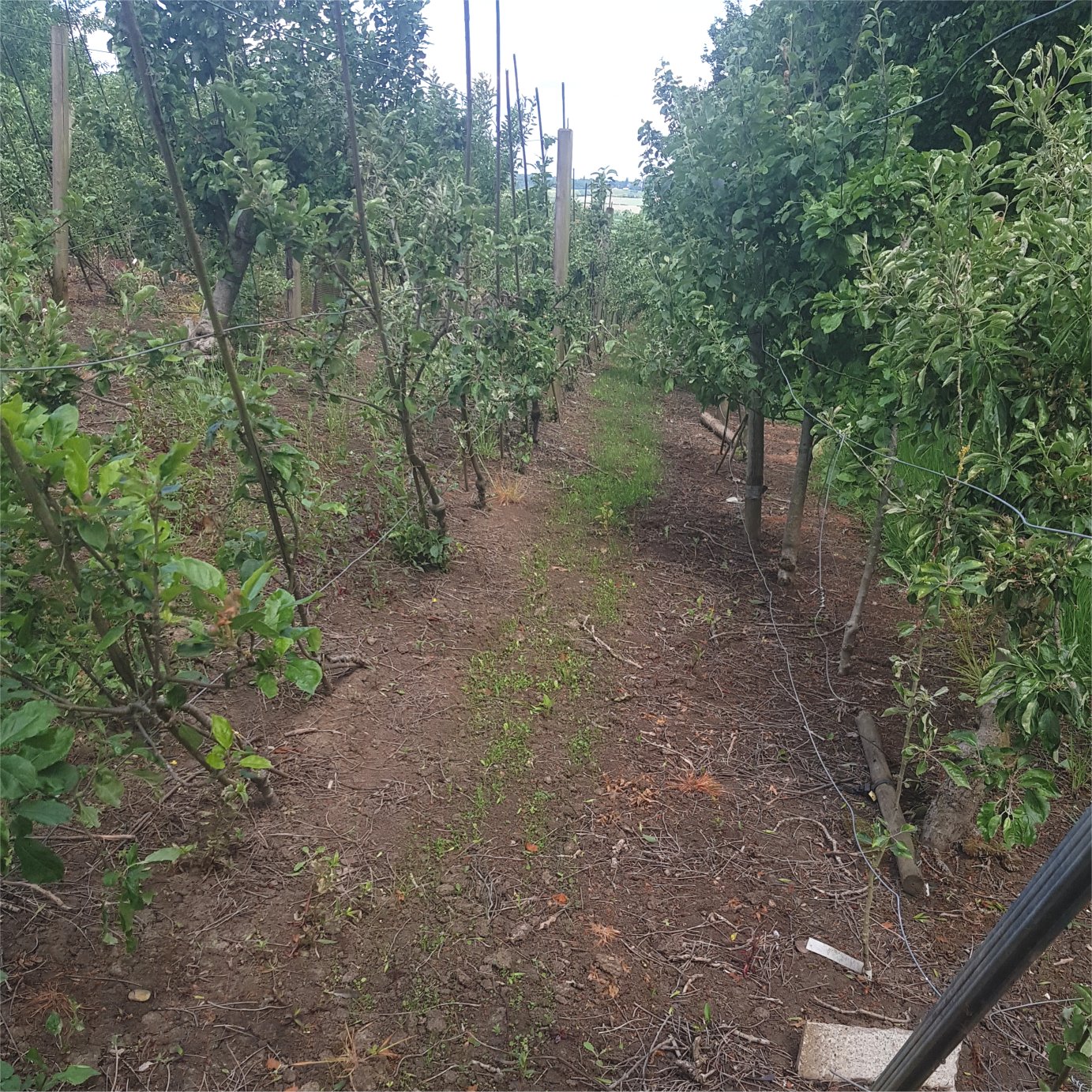
Then only 1 week later they put a spurt on. Not that we had any rain, but we had very heavy dew in the mornings. Note the width, only a third of the alley width, and a walking area either side,
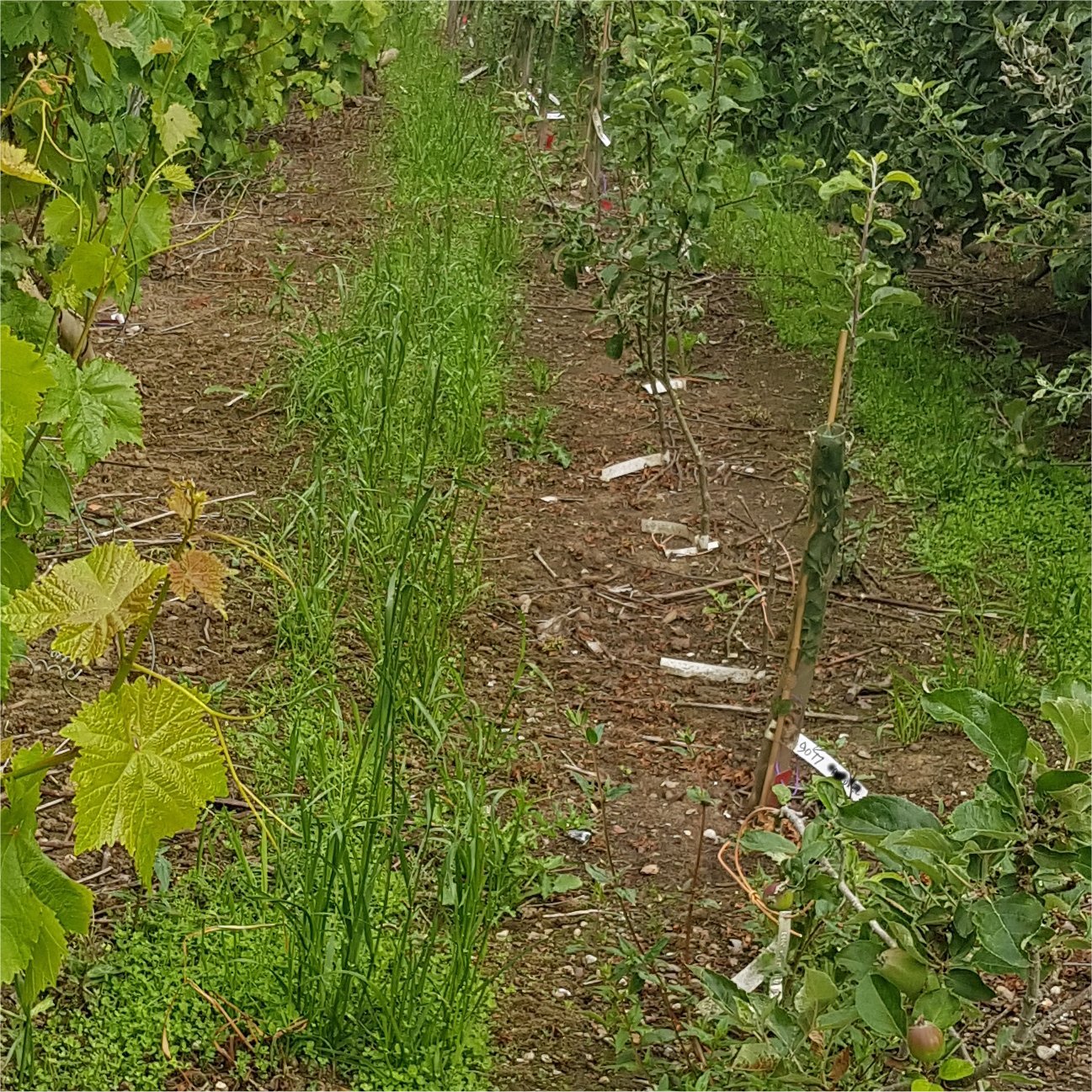
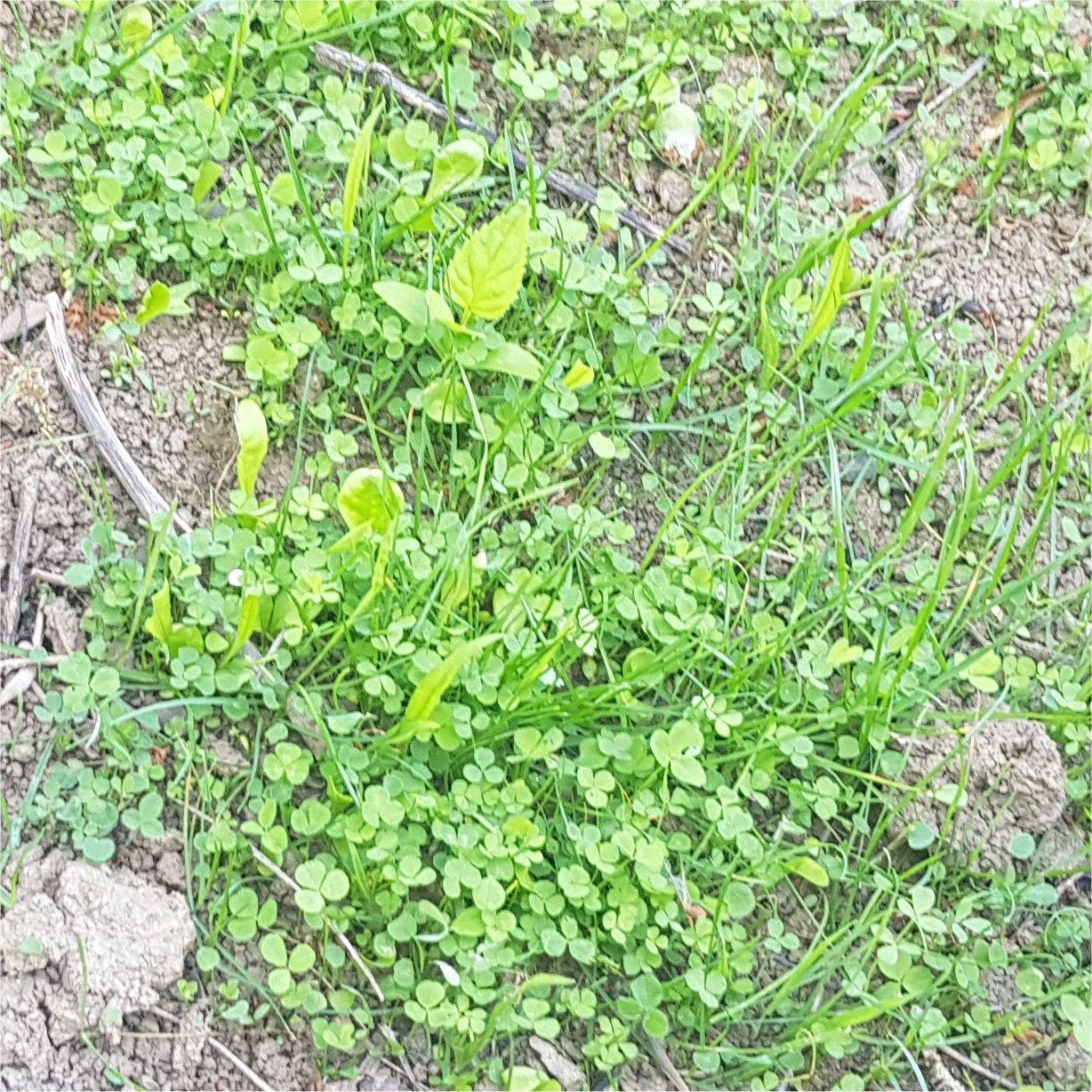
From the seedlings growing, you can just make out the species growing; in this case, there is clover.
Then, another 2 weeks later, they were of a height that you cannot walk through them.
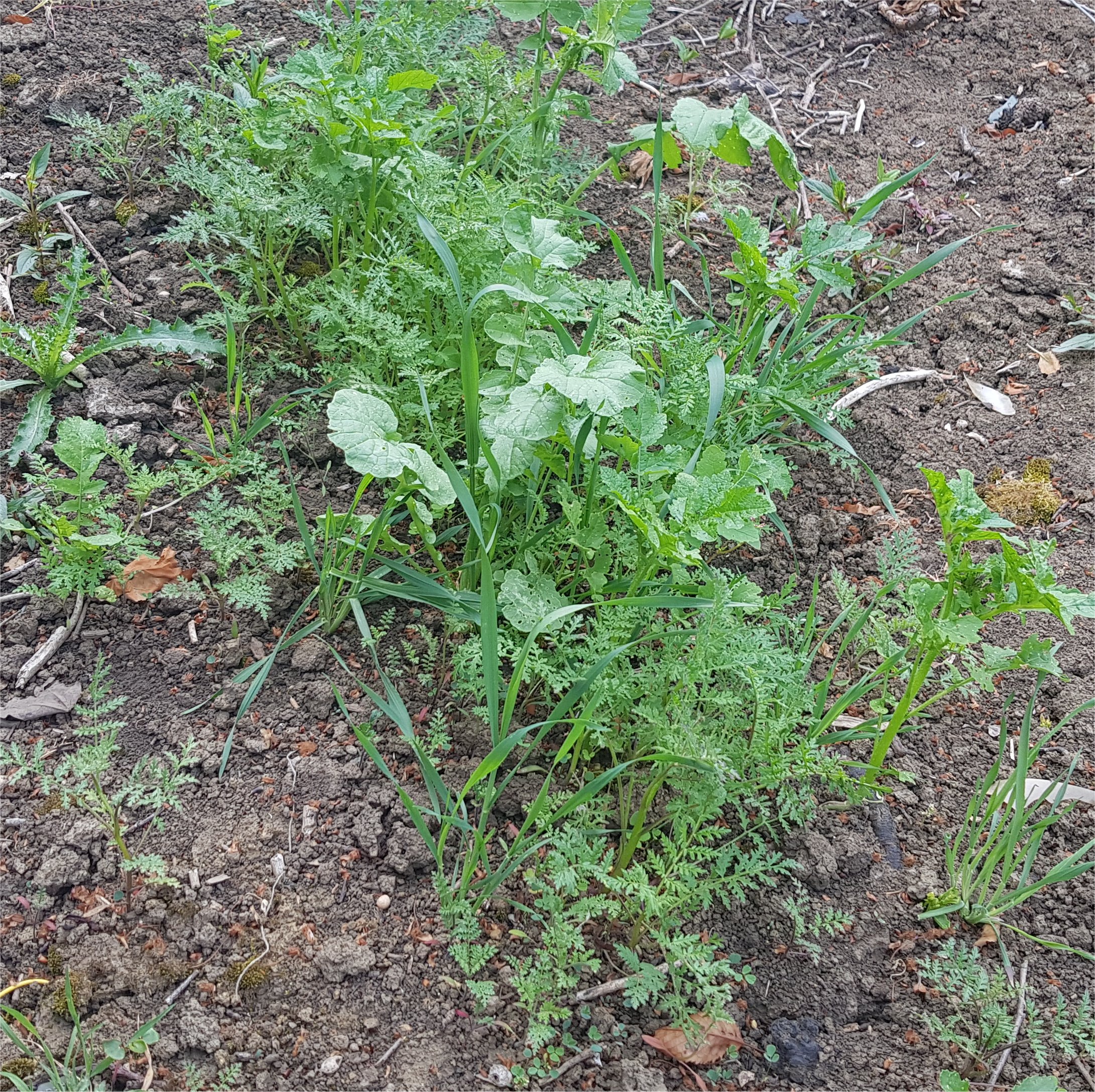
Now, fast-forward another week to 21st June 2025, and some of the flowers are coming out.
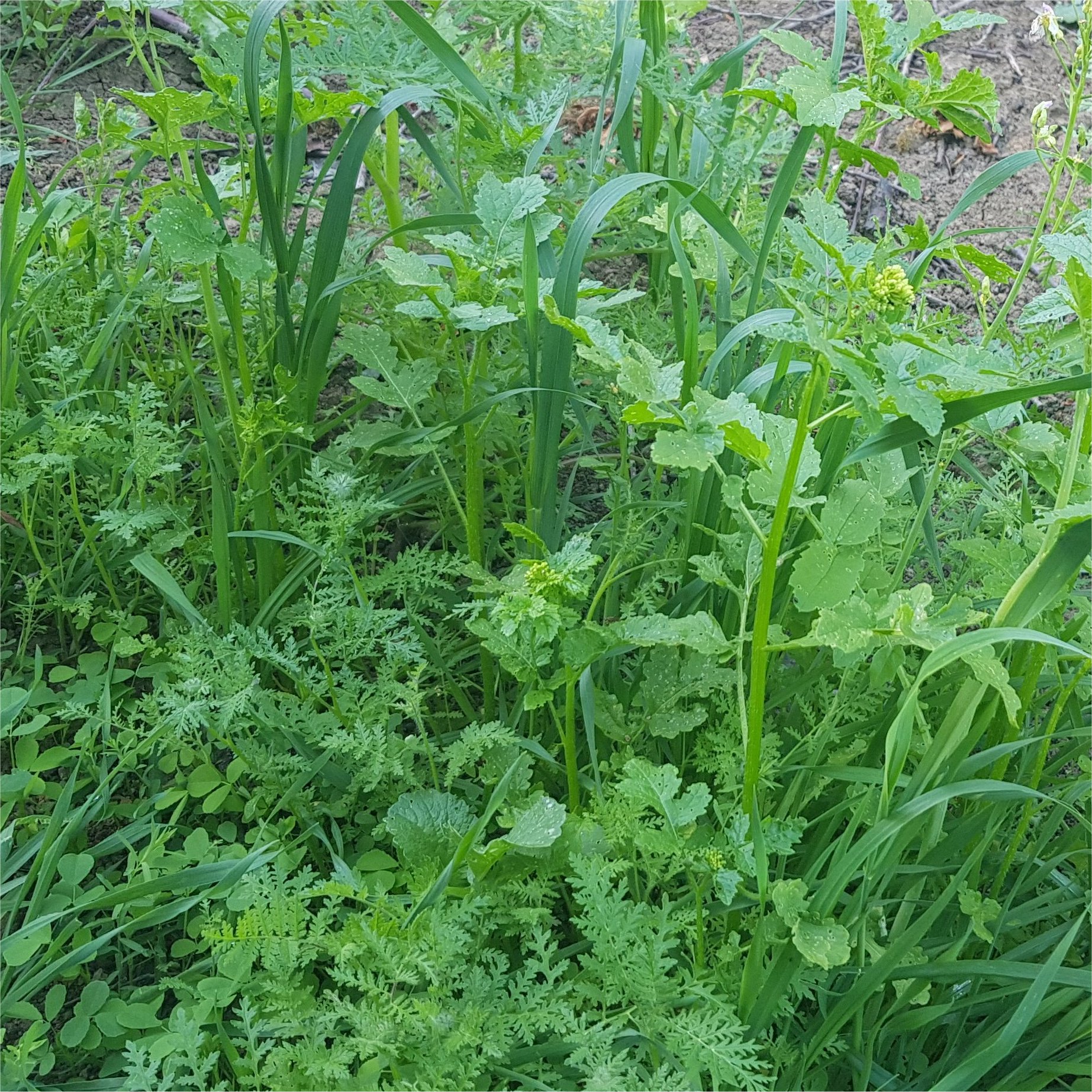
The radish is certainly growing fast. We had to reseed some of the radish in a few areas that were stripped by the pigeons. We used Tillage radish, as it has a particularly deep tap root, which helps to improve soils structure and drainage by drilling down through heavy soils and compacted layers.
You can see in the about photo a lot of leaf notching and holes, which is an indicator of the flea beetle. If not too severe, they can grow out of it and survive. But if you have a bad infestation, the options are to lose the plants or to spray.
Flea beetles are small, jumping insects that can cause significant damage to radish plants by eating small, round holes in the leaves. These pests are particularly problematic for young seedlings and in hot, dry weather when they multiply rapidly.
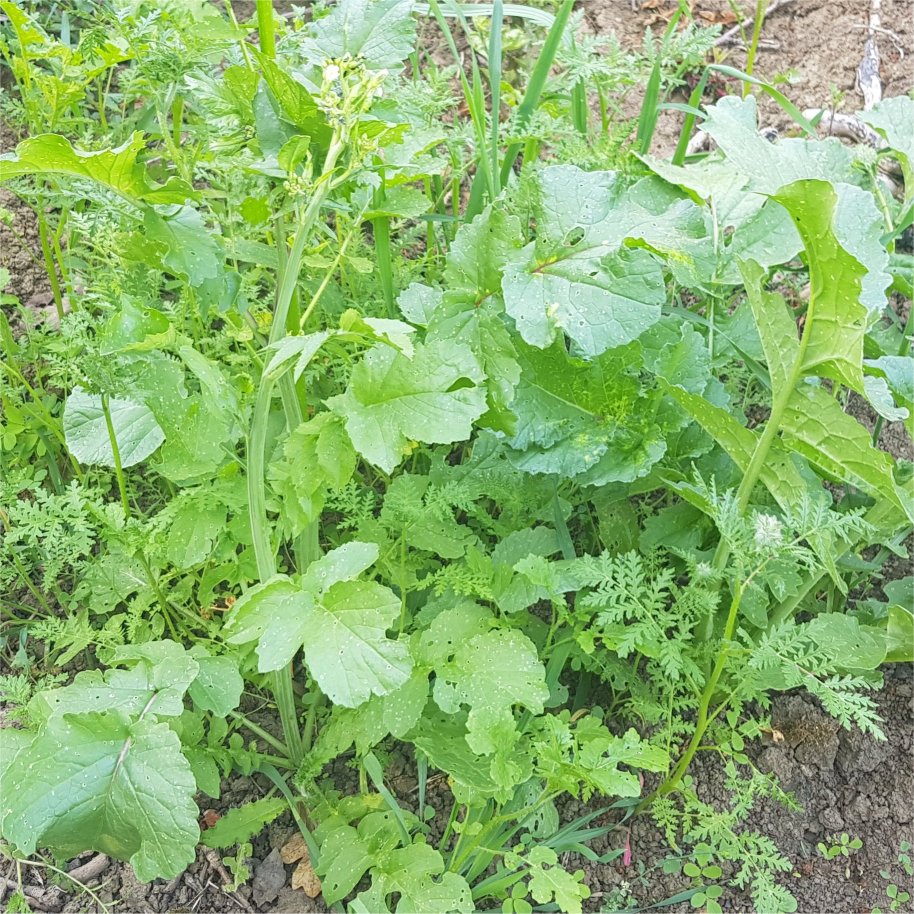
A couple of photographs showing that some species are in flower already. Some of the mustards are flowering as well, but I missed that, and they now have seed pods.

The above photo is Phacelia (Phacelia tanacetifolia) – Nitrogen lifter. Fast to establish summer cover. Large root mass to improve soil. A favourite for insects due to its high nectar output. Good on light soils. Sow from May. Must be destroyed prior to seeding to avoid volunteers in the following season.

The above photo looks like Hairy Vetch (Vicia villosa), which is strange as I never ordered any. Must keep an eye on this one to see if the flower develops more.
So I think the next update to this Blog will be late August, heading towards autumn time.